Trackcol Microsurfacing
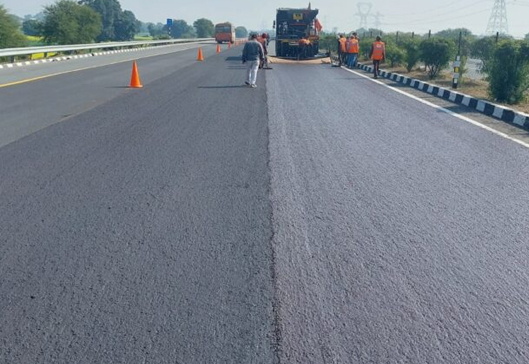
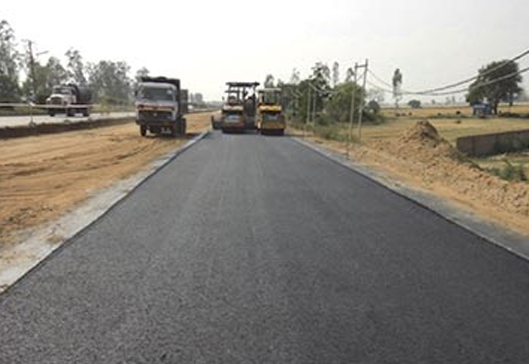
Microsurfacing is a blend of Polymer Modified Emulsified Bitumen, Dense Graded Crushed Mineral Aggregates, Mineral Filler (usually Portland Cement), Water, and Chemical Additives to help the mix set quickly. It's a polymer-modified asphalt emulsion-based material that's cold-mixed and fast-setting, acting as a protective seal coat to prolong pavement life. Microsurfacing is a slender, resilient layer composed of polymer-modified bitumen emulsion mixed with dense graded crushed mineral aggregates, mineral fillers, water, and chemical additives for improved traction. This proves to be a budget-friendly approach to refresh road surfaces, effectively sealing minor cracks and addressing other irregularities.
History of Micro surfacing Emulsion :
Micro Surfacing originated in Germany in the early 1970s. Through ongoing research and development, a modern version of Micro Surfacing emerged and was introduced in the United States in 1980. Today, it stands as the most cost-effective treatment for addressing rutting problems in road surfacing.
Composition :
The typical composition of Microsurfacing mix consist of following ingredients
- NR Latex Modified Bitumen Emulsion ( 12% to 13% )
- Dense Graded Aggregate ( 6 mm 100% )
- Cement (0.5% to 1.5% )
- Additives ( 0.5% to 2.0% )
- Water ( 10% to 12% )
Advantages
| 1 | Quick Setting | 2 | Early opening to traffic |
| 3 | Higher resistance to abrasion | 4 | Can be used for Medium to high volume traffic corridors |
| 5 | Fast construction | 6 | Delays in hardening of bitumen due to environmental conditions |
| 7 | Less air/noise pollution | 8 | Preservation of pavements’ structural strength |
| 9 | Cost effective | 10 | Marginal raise in pavement height |
| 11 | Prevent various type of cracking | 12 | Least environment pollution |
| 13 | Seals wide cracks effectively | 14 | Faster laying process |
| 15 | Better visibility at night | 16 | High durability due to polymer effect. |
| 17 | No rolling and compaction is required | 18 | Long life of Pavements |
Applications :
- A. Preventive and periodic maintenance
- B. Various type of filling with the help of special Seal coat
- C. Improvement in skid resistance and friction on road
Limitations :
- Not to apply in rain or rainy weather
- Aggregates should be dry, clean and dust free.
| Requirements | Specifications | Test Method | |
|---|---|---|---|
| Residue on 600µm IS Sieve ( % by mass), maximum | 0.05 | IS : 8887 | |
| Viscosity by Saybolt Furol Viscometer at 25ºC second | 20 - 100 | IS : 8887 | |
| Coagulation of Emulsion at low temperature | NIL | IS : 8887 | |
| Storage Stability after 24 h (168h) % maximum | 2 (4) | IS : 8887 | |
| Partical charge +ve /-ve | + ve | IS : 8887 | |
| Test on Residue | |||
| a | Residue by evaporation % minimum | 60 | IS : 8887 |
| b | Penetration at 25 °C/100g/5s | 40-100 | IS : 1203 |
| c | Ductility at 27 ºC cm minimum | 50 | IS : 1208 |
| d | Softening Point °C minimum | 57 | IS : 1205 |
| e | Elastic Recovery * % minimum | 50 | IS : 15462 |
| f | Solubility in Trichoroethylene % minimum | 97 | IS : 1216 |